Mostrando entradas con la etiqueta Wiki-Green. Mostrar todas las entradas

4/05/2014

ALEXANDER THE GREAT'S TROOP DIET

A lot of the food Alexander and his army ate was fish since most of the support and supplies came from his navy. They were required to transport a great deal of the food. When Alexander didn't have access to his navy his troops carried their own food, mainly bread and nuts. They even carried their own water. At times they would even steal their food when trade wasn't possible. The food they ate depended on the place they were. In Babylon they ate corn and fish. In India they ate cattle and deer. They ate what they could find in order to survive. They even ate tree bark and any type of eatable plant. Alexander himself was temperate in eating and he didn't stay long in symposiums because he didn't drink much.

1. What food did Alexander's army eat?
a. mainly fish
b. only deer
c. only meat
d. only fruit

2. What did they mainly eat in Babylon?
a. deer
b. plants
c. fruit
d. corn and fish

3. What did they eat when they didn't have access to the navy?
a. bread and nuts
b. only water
c. only meat
d. only plants

4. What did they mainly eat in India?
a. bread only
b. deer and cattle
c. nuts
d. insects

4/04/2014

Phylloxera in Spain

Phylloxera is a disease caused by the insect of that name that parasitize lives. Apparently, it comes from the U.S. and arrived in Europe affecting, first, Britain (here so very localized) and France around 1863; shortly after, the problem affected Portugal and from 1877 to 1878 the first cases appeared in Spain, although it wasn´t until the late nineteenth century when the plague affected our country most severely.
The typical Mediterranean trilogy: cereal, vine and olive crops essentially rainfed land, have made up an ancestral agriculture set in Spain, whose historical development has gone through various vicissitudes.

We cannot deny that our agriculture suffered from excessive deficits but overall, for the cultivation of the vine the influence that the phylloxera plague had and its the arrival in France  made Spanish wine occupy a leading position in the  international market  for ten years, between 1882 and 1892. Shortly after, the effect of phylloxera will be very negative for our wine and the decrease in exports will be compensated  by putting other products on  the market such as oranges from Valencia.


 1.-  What benefits and vitamins do grapes have?

- vitamin B6 y B12
- calcium and phosphoru    
-iron and magnesium  
- water, sugar, tannin and vitamin C

 2.- What main uses does grape production have?

- table grapes and grape to make wine
- livestock feeding
- bakery
- Pharmacy industry

3.- How long have the grapes been grown in the Iberian Peninsula?


- From the time of Al-Andalus

- From the Paleolithic
- Since the Enlightenment
- Strabo, III, 2, mentioned that, in pre-Roman times, from Turdetania (current western Andalusia) was exported, "wheat, plenty of wine and oil ...".
The introduction of these crops and intensification of production that eventually made exports possible may be attributed to the colonizers: Phoenicians and Greeks.

4.- When does grape harvest take place?

- In January
- In June
- Depending on the regions. In our area is carried out in September
- At Christmas

TYPICAL FOOD FOR LENT AND HOLY WEEK IN SPAIN

It has had a great influence on the cuisine of the nation as we can see in its festivities and traditions.
One of the major festivals in the country is Holy Week, it is celebrated before the Catholic holiday of Easter and marks the end of Lent.
Spain has a varied and unique cuisine that reflects this religious and cultural tradition.
Lent and Holy Week in Spain have their special cuisine.
One of its features is the austerity both in the preparation of food and the ingredients used.
According to religious tradition, Catholics mustn´t eat meat throughout Lent and Holy Week.
Since meat is forbidden, many of the dishes served during Lent and Holy Week were made with fish and vegetables.
Tradition says that on Fridays of Lent and Ash Wednesday you must fast and abstain from eating any food all day, this sacrifice continues until Good Friday. On this day, abstinence is only from dishes containing meat.
The exception to
abstinence was granted by the Catholic Church as a privilege through a document called “papal bull”, the holder of a bull could eat certain foods in these times. 
Fasting should be considered as just having one meal a day and abstain from certain foods. The only meal that was made during fasting was at sunset and it was called "collation". 


Some of the most typical dishes of Lent and Holy Week are:

CHICKPEA STEW WITH COD
This dish is made with chickpeas, spinach and cod. 
Some recipes leave out cod to make a totally vegetarian dish. It has also got plenty of sautéed garlic and leek in olive oil.
Soaked and cooked chickpeas are added at this time. Finally, cod soaked and chopped spinach are added to make a tasty stew.


GARLIC SOUP
Another important dish during Easter is garlic soup. 
Its ingredients are garlic, oil, bread, water and eggs. It is usually served in plates made of clay, it is typical of northern Spain y it will make your spirit and soul warm.

DESSERTS
Sweets and puddings became the protagonists of most of the dishes for satisfying your appetite and helping to avoid the temptation of eating meat.
Among the most popular are “torrijas” and fried milk . Here are the recipes.

Torrijas
Ingredients
Stale bread
Milk
Eggs
Cinnamon stick
Olive oil
Preparation
 
Cut the bread into slices and soak them in boiled milk with cinnamon sticks and orange peel.
Fry and finally sprinkle with cinnamon sugar flavored.


Fried milk

Ingredients:
1 liter of milk.
Flour
Sugar
Orange peel
Cinnamon stick.
Eggs
Oil for frying

Preparation.
Boil a liter of milk with the orange skin and cinnamon stick.
In a bowl mix the flour with the sugar, Then, we add the milk that we have previously boiled and  mix everything well
We put all the mixture to simmer for approximately a quarter of an hour
 while stirring, until the dough gets thick enough. At this point, we can put the dough into a mould and in the fridge to cool down.
Once it is solid we will dice the dough
Put some flour in a bowl and beaten eggs in a different bowl. Dip the bits we cut first into the egg and then into the flour. Finally,
fry in sunflower oil or mild olive oil.

Trivial Questions

1º. Christianity was introduced into Spain around:

The year 100
The year 33
The year 133
The year 1

2º. Lent is the period that goes before:

Advent
Christmas
Holy Week
Holiday
 

3º. During Lent you mustn´t eat:
Prawns
Meat
Sweets
Fish

4º.
The fasting  food at Easter was called
Snack
Canapé
Collation
Tasting

5º.
The only meal during fasting at Easter used to be:
Breakfast because it is the most important meal of the day.
At noon
At sunset
At dusk

6º. A  “bull” is
A sin
A privilege granted by the Catholic Church
A pet
University Group

7º. The privilege that allowed certain people to eat meat was called
Gluttony
Tuna
Bull
Mule

4/03/2014

EATING HABITS ARE CHANGING NOWADAYS


After decades of overspending, Greece was forced from late 2009 to grapple with its ruined finances by imposing harsh taxes and surviving on rescue loans from the IMF and European Union.The result means nine out of 10 Greeks are changing their food-shopping habits, according to a September survey by the consumer organization KEPKA. People are now eating out less, cutting back on meat and swapping quality food brands for cheaper substitutes.The growing demand for affordable meals has been met by magazines and a new batch of low-budget cookbooks, such as The Cooking Economy and Family meals for €5 – 110 recipes for the financial crisis.
The number of vacant stores and homeless grow by the day, Athens's coffee shops are busy and streets filled with new cars. But nowadays there are worrying signs of poverty. There are children who go to school without enough to eat, people who open up their cupboards, and see little more than a bag of flour, and think – 'what can I do with that?
 Bletsas, the chef advises "Never, ever throw anything away: You can preserve it, freeze, cook it, reuse it, or give it to someone who needs it more than you."
Sample Starvation Recipes:
Bulgar-wheat "meatballs"
Boil bulgar wheat until tender and mixing with grated onion, parsley, spices, and egg. Gelatin sheets can be used for binding if no egg is available. The wheat is rolled in flour or bread crumbs and fried in olive oil.
Cabbage and chestnuts
Slices of cabbage are set in a single layer on a greased tray and chestnuts grated over the top. Finely chopped parsley and mint are added along with a drizzle of olive oil; the mixture is baked in a medium-hop oven until browned. The chestnuts can also be mashed or pureed.

1. Why are there signs of poverty in Contemporary Greece?
a. Because of War
b. Because of loans
c. Because of low salaries 
d. b and c 

2. You can make " meatballs" with
a. cabbage
b. wheat
c. cuccumber
d. letuce

3. Parsley is used in
a. coffee
b. mint
c. olive oil
d. meatballs

4/01/2014

DIET DURING GERMAN OCCUPATION

In the grim years of the occupation, starving Athenians invented ways to stay alive, helped by daily advice columns in the capital's newspapers known as "survival guides.""It was all about getting by with very little". They collected crumbs so that they could have a cupful of crumbs by the end of the week, something extra to survive. They hunted stray cats and dogs, they chewed their food very slowly, to cheat their stomachs, they drank a brew made of ground chickpeas instead of coffee, they used raisin pulp as sweetener.
During the occupation, dead bodies were collected off the street each morning, the hills were stripped bare of wild greens and families had to keep round-the-clock guard of their backyard chicken coops.
In the countryside and  villages things were better because there were farmers and cattle breeders who could have enoufh products to feed their families.

1. During the German Occupation the Athenians

a. starved
b. had plenty of food
c. ate meat very often
d. had plenty of sugar

2. During the German Occupation the Athenians

a. ate stray dogs and cats
b. ate rich meals
c. never starved
d. didn't die of starvation

3. In the countryside things were

a. better
b. worse
c. the same
d. indifferent


DIET IN BYZANTIUM

Diet in Byzantium

Byzantine food consumption was based around class. The Imperial Palace was a metropolis of spices and exotic recipes; guests were entertained with fruits, honey-cakes and syrupy sweetmeats . Ordinary people ate more conservatively. The core diet consisted of bread, vegetables,pulses , and cereals prepared in varied ways. Salad was very popular; the Emperor John VIII Palaiologos  asked for it at most meals on his visit in 1439.
The Byzantines produced various cheeses, including anthotiro . They also relished shellfish and fish, both fresh and salt-water. They prepared eggs to make famous omelettes — called sphoungata, i.e. "spongy" — mentioned by Theodore Prodromos. Every household also kept a supply of poultry .
Byzantine elites obtained other kinds of meat by hunting, a favourite and distinguished occupation of men. They usually hunted with dogs and hawks. Larger animals were a more expensive and rare food. Citizens slaughtered pigs at the beginning of winter and provided their families with sausages, salt pork, and lard for the year.
Only upper middle and higher Byzantines could afford lamp. They seldom ate beef, as they used cattle to cultivate the fields. Middle and lower class citizens in cities such as Constantinople and Thessalonoki consumed the offerings of the taverna . The most common form of cooking was boiling, a tendency which sparked a derisive Byzantine maxim—The lazy cook prepares everything by boiling. Garos sauce in all its varieties was especially favored as a condiment.
Thanks to the location of Constantinople between popular trade routes, Byzantine cuisine was augmented by cultural influences from several locales, Greeks, Persians, Turks, Arabs. 
1. What did ordinary people eat in Byzantine Time?
a. conservative dishes
b.  exotic recipes
c.  rare food
d. expensive food

2. Only ............... could afford lamp.
a. poor people
b. upper class
c. higher class
d. b and c

3. Byzantine cuisine was influenced by

a. Turks
b. Persians
c. Arabs
d. all the above


3/31/2014

THE ANDALUSI GASTRONOMY

When the Muslims came to the Gothic Roman Hispania, they found a poor diet scenario. The food was scarce and was based almost exclusively on grain consumption.
The policy of the Umayyad emirs of al-Andalus, was to give a boost to everything related to agricultural development.  The irrigation systems were improved and increased, countless new species were introduced, large-scale cultivation was encouraged, and production became so high that they began trading with food surpluses .It was a real "green revolution".
Unlike the traditional Christian trilogy of wheat, oil and wine, the Andalusians created new eating habits in which vegetables were not only the foundation, but the essential element. The Andalusians could eat fresh vegetables all year round
 Legumes, soybeans, chickpeas, lentils and beans were considered highly nutritious food, the flatulence that these produce was reduced by the use of aromatic plants.


As for fruits, since the eleventh century in Al-Andalus they had almost the same fruits as we have in our fields today. The most consumed fruits were watermelon, coming from Persia and the pomegranate, which came from Syria. This fruit eventually became the symbol of Muslim Spain.  Many other fruits such as the quince or the apricot, coming from very different places, were introduced and adapted to the climate. The spices were widely used in the cuisine of Al-Aldalus. Cinnamon was brought from China as well as saffron, cumin, sesame seeds (or sesame), coriander, nutmeg and anise (anisum) These spices apart from being used as a condiment in the preparation of various dishes, were exported from Al-Andalus to the rest of Europe and even to Egypt and North Africa, which favored the development of the economy.

The Andalusians are also responsible for the introduction of cane sugar in Europe, which replaced honey as a sweetener, sugar can also be used to keep certain perishable foods such as fruits preserved to last longer.
Cereals were used to make, not only bread, but also porridge, semolina  and soup.
They used wheat flour to make dough/ pasta which, contrary to the belief that it was Marco Polo who introduced this in the West from China, it actually came from North Africa.


A very popular dish was the noodles. They were cooked with lamb or milk and honey as a dessert.
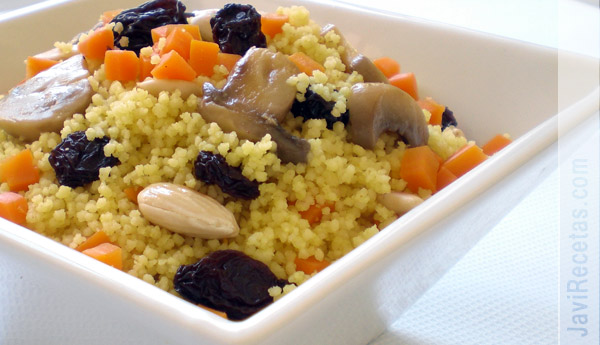
 But undoubtedly the most appreciated way to use wheat flour was, in form of semolina, in the preparation of the well-known couscous dish of Berber origin, which was introduced by the Moors in the thirteenth century. Soon, it became one of the most prestigious meals in the Moorish kingdom of Granada


The meat that the Hispano ate the most was lamb. It was cooked in many different ways: roasted, stewed or fried.
They also used mincemeat to make their famous lamb and pork sausages: the meatballs.

Fish was also appreciated, both saltwater and freshwater.
It was prepared in different ways: fried in olive oil, stuffed, stewed and pickled. The most popular  were mullets, salmon, sardines, anchovies ,and tuna. Some species of fish were preserved only by applying salt, removing the bones  and exposing them to the sun; others were macerated in salt and vinegar and eaten cold (pickles).

Our account of the contributions of Al Andalus to our cuisine would not be complete if we didn´t make any reference to the modes of "good eating".
Several milestones marked the Andalusian "art of fine dining"; in the ninth century, with the arrival in Al-Andalus Caliphate  Alhaken II of the Kurdish  "Ziryab"  coming from Baghdad, the particular order in which the dishes are served at the table, was established : first, soup; then, fish or meat and finally desserts. It was also this man who introduced the use of spoons and glasses on the table.

1.           What was the diet of the visigoth Roman Hispania mainly based on before the arrival of the Muslims?
1.            Fruit and vegetables
2.            Cereals
3.            Legumes
4.            Meat
2.             What kind of food became the basis of the al Andalus diet?
1.            Fruits and vegetables
2.            Meat
3.            Sweets
4.            Dried fruits and nuts
3.            What fruit has become the symbol of Al Andalus?
1.            Watermelon
2.            Pomegranate
3.            Melon
4.            Apricot
4.           Where does dough/pasta come from?
1.            China
2.            Japan
3.            Italy
4.            North Africa
5.            Where does couscous come from?
1.            North Africa
2.            Syria
3.            Arabia
4.            Egypt
6.            What is the most used meat in the Andalusian cuisine?
1.            Pork
2.            Beef
3.            Chicken
4.            Lamb
7.            What well-known personality brought to the peninsula the usual order of the dishes, which we still use today?
1.            Abderramán I
2.            Almanzor
3.            Ziryab
4.            Alhaken II
8.            What other innovations did he introduce in the Cordoba Caliphate court?
1.            Fork
2.            Spoon
3.            Knife
4.            Silverware