6/30/2013

LENTIL SOUP


The ancient recipe: Lentil Soup

Ingredients
  • 1 cup dry lentils
  • 2 small leeks sliced
  • 1 bunch cilantro
  • 1 ½ tsp dry mint
  • Fresh ground black pepper
  • Olive Oil
  • Red wine Vinegar
Boil on low heat 1 cup of dry lentils over low heat with enough water to cover them and 1 inch above. Add the leeks and the fresh coriander (cilantro). In a small bowl mix the mint, dry coriander and the black pepper, add to the soup. Let it simmer until the lentils are soft, add vinegar and olive oil.

Nowadays Lentil soup is still basic food in our diet with some changes perhaps- oregano instead of cilantro and onions instead of leeks. 

FROM ANTIQUITY TO MODERN GREECE


When you live in Greece you are reminded everyday of the history of this land. Not only by the ancient temples and ruins you can find all over the country, but by the language, music, art and of course the food.
 The food culture of the ancient Greeks has influenced many cultures and  the food in Greece today is the result of many influences from various cultures as well. But we  see many similarities when we compare the modern Greeks with the ancient Greeks.
 The ancient Greeks wanted to establish a civilized lifestyle that distinguished them from the barbarians and food played an important role in this. A meal was civilised because  Ancient Greeks  had good company while eating , served wine in a special way e.t.c. For them eating was not a necessity but it was a social event.
Plutarch, a Greek historian had said, “We do not sit at the table to eat… but to eat together”.
Today, eating in modern Greece is indeed a very social event. It is common  for people to relax and have great discussions or arguments about  politics, social problems or relationships while eating dinner or lunch. These meals can last for hours.
 Eating alone, even for the younger generations of Greeks is not common. You won’t see people taking a lunch break at a park eating their meal alone. Instead Greeks will  order all together at the office or sometimes share the food they have brought from home.  
Bread, Wine  Olive Oil, Honey and Figs ( which are still found in our dietary habits ) were part of their diet. For the Greeks these foods represented frugality but it is thought also loyalty to their country since these foods were produced in Greece.


In the book FOOD, A CULINARY HISTORY it says that the Greeks consumed no more than 4 pounds of meat a year-those who consumed meat and milk were nomad hunter-gatherers as opposed to civilized people who farmed the land and could transform nature (grapes=wine, wheat=bread, olives=olive oil).
Economics also played a role: the animals were more useful alive providing milk for cheese and wool.
Nowadays though Greeks eat a lot of meat


References
Dalby, A. (1996). Siren Feasts: A History of Food and Gastronomy in Greece. New York, NY: Routledge.

Dalby, A., Grainger, S. (1996). The Classical Cookbook. London and Los Angeles: British Museum Press/John Paul Getty Museum Press.
Sonnenfield, A. (1999). Food, A Culinary History, J.L. Flandrin, M. Montanari, (Ed.). New York, NY: Columbia University Press.
Tannahill, R. (1988). Food in History. New York, NY: Three Rivers Press a division of Crown Publishers

6/28/2013

MEETING ABOUT THE SPORT.


MEETING ABOUT THE SPORT.
The seven of may we had a talk about the sport, it started with a doctor, he explained the benifits of doing sport, he said for example, that do sport  reduces the risk of disease, help you to be on fit… When he finished of explain it to us,we asked to him some questions that we wanted to know.
After that, carried on talking a technical sports counci, she explained all the sports that we can do in our town. She also showed to us the sports facilities that there are, for example, the bike, building young, and he said what activities we can do on it. At the end, she said that with this they want achieve a healthier population and make it a daily habit sport.
And finally a hockey player told us  her experience in the sport and the way of reconcile with the studies.
All in all, the talk was very good, and I think that it can be useful for many people.


Work by : Judit Gutiérrez Gámiz.

6/23/2013

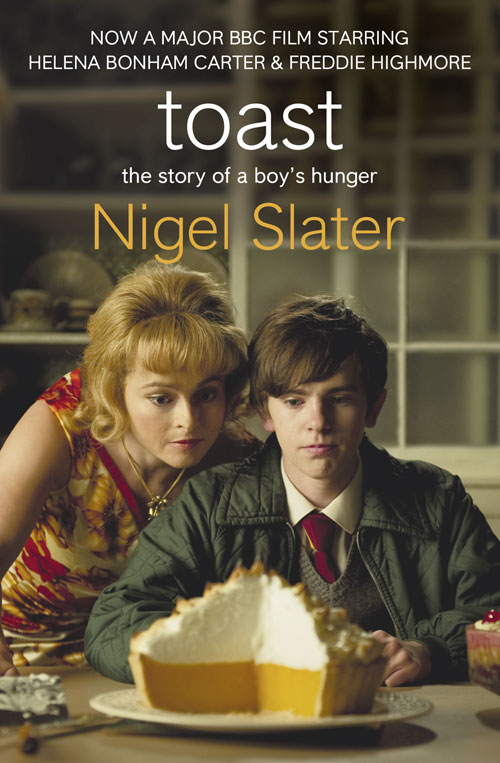
Toast.

In this section we’ll be working on some movies related to gastronomy, as they are a useful way to learn vocabulary, practice listening skills, improve our grammar and writing…


The first movie we’ll work on is “Toast”, a British film directed by S. J. Clarkson and starred by Oscar Kennedy, Freddie Highmore, Ken Stott and Helena Bonham Carter. Many important and traditional British dishes are portrayed in the movie, as well as the story of a man who had the desire of doing something he liked and who could achieve it.

Here you can watch the movie trailer, and in this link you can download the activities you can do on the movie. We hope you enjoy it.  


6/21/2013

LOPE DE VEGA

Félix Arturo Lope de Vega y Carpio was borned 25 November 1562 and he died 27 August 1635. He was a Spanish playwright and poet. He was one of the key figures in the Spanish Golden Century Baroque literature. His reputation in the world of Spanish literature is second only to that of Cervantes, while the sheer volume of his literary output is unequalled, making him one of the most prolific authors in the history of literature.

His Nicknames were "The Phoenix of Wits" and "Monster of Nature" by Miguel de Cervantes, Lope de Vega renewed the Spanish theatre at a time when it was starting to become a mass cultural phenomenon. He defined the key characteristics of it, and along with Calderón de la Barca and Tirso de Molina, he took Spanish baroque theatre to its greater limits. Because of the insight, depth and ease of his plays, he is regarded among the best dramatists of Western literature.
Some of his best plays are:


  • Fuente ovejuna.”
  • El amor enamorado”
  • La dama boba”


Questions:

  1. When did Lope de Vega born?

a) In 1562.

b) In 1570.

c) In 1610.

d) In 1650.

    2. What was Vega´s nickname?

a) “The best novelist of 60´s”.

b) "The Phoenix of Wits”.

c) “The keen”.

d) “The wise”.

    3. Which of the following plays, were writted by Lope de Vega?

a) “The light”.

b) “Don Quijote”.

c) “The Shadow of the wind”


d) “Fuenteovejuna”

6/17/2013

2nd cooking workshop. English cooking.

This time, seven students of the Alfonso XI High School of Spain have taken part in a the second cooking workshop. We have cooked mulligatawny, scampi, shortbread biscuits and syllabub

- Mulligatawny 
-Scampi 
- Shortbread Biscuits
-Syllabub.
We had a great time cooking, because we did all the food.
After preparing and tasting a delicious dinner, we did an interview to Michael Jacobs, the person who taught us how to make the English recipe.
Here is the interview.
1. What's your name? 
- My name is Michael Charles Jacobs.
2. How old are you?
-(We thought he was younger) I'm sixty years old.
3. Where did you live in England?Where do you live now?
I lived in London. Now I live in Frailes a quite and small town near Alcalá la Real.
4. What do you do?
- I'm a writer.
5. What kind of books do you write? 
- I write really good books. They are travelling books.
6. How do you get the inspiration for writing?
- I get it by travelling around all the world.
7. How many books have you writen?
- I've writen 27 books.
8. Since you were a children do you want to be a writer?
- No, when I was a child I wanted to be a famous painter who met famous people, but when I was 20 I decided that I enjoyed writing, so I decided to be a writer.
9. What languages do you speak?
I speak Italian, French, German, Hungarian and Spanish.
10. Where have you lived? 
I have lived in England, in France, in Italy, in the United States, in Hungry and in Spain. 
Here in Spain he has lived in a lot of places like Sevilla, La Coruña, Madrid, Barcelona and now in Frailes(Jaén).
11. What famous people do you know?
- I know a lot of famous person, most of them are writers and singers. For example, I know García Márquez, David Barry and very famous musicians like David Bowie or Will.I.Am and also the famous components of the mitic band called "The Beatles" like Paul McCartney.
12. Tell us about your funniest experience in any country.
-Well, two years ago I went to Colombia to look for information for my last book and I was kidnapping, fortunately I was lucky.
13. Are you a proffesional cooker?
- No, I only cook for relaxing.
14. Which is your favourite Spanish's dish?
My favourite Spanish's dish is "ajo blanco" It's delicious.
15. What do you think about today's experience?
- It has been great! I had never done this before and it has been really interesting
We are really greateful for your help in this project!
Work by Elena Ibáñez Muñoz

6/12/2013

Mobilitiy to Romania from our point of view

Hello, we're Carlos González and Alejandro Caño (spanish teachers participating in the mobility to Romania in our Comenius project).
we're going to tell you our This is our diary of our mobility to Romania.

Day 1. Departing from Malaga 11st of May 2013
We began our journey from Alcalá la Real at 14 h. Our flight departures from Malaga at 20:00 o'clock. Ohh It was a joke because finally the flight was delayed 4 hours. We had enough time to revise everything in our trip and of course to learn some romanian word.

Finally, we were lucky and the flight departures at 23:00 so after a pleasant flight we landed in Otopeni airport in Bucarest at 04:00 am (In Romania is 1 hour more than in Spain). So we went to hotel to sleep a little bit

Day 2. Bucarest to Brasov Capital of Transilvania 12nd of May
We got up at 09:00 o'clock, we took a coffee and go out to have a look around of the beautiful city of Bucarest. We have only a few time because we were taking a train from the Bucarest to Brasov.

The capital of Romania has an enormous avenues, we walked around the train station, the first thing that atract our attention is a church. Most of romanian people are ortodoxe christians. The church is very beautiful. we payed attention to a mass and we bought candles (luminieri in roman language) in memorials deceased people.
We took the train to get to Brasov, the capital of Transilvania, the region of Dracula....  SEE a report in a television spanish programme

Fastly we got to the pension and we went out to change money 1 € = 4'2 Leis (We need it beacuse there's a different coin in Romania) we looked for a restaurant to have lunch. We were hungry, the food was delicious and it was very cheap.

After lunch we spent the whole afternoon evening aroun the oldtown of Brasov, seeing the black cathedral and enjoying the atmosphere of this beautiful city.

Day 3. From Brasov to Piatra Neamt
Oh, we're getting up in the region of Dracula! Night was calm, our neck is ok, we've the same blood as the night before.
After breakfast, we spent the morning waking around Brasov. Definitily it's a beautiful city which deserves to go back very soon.
At 17:00 o'clock Michaella and Christian is picking us up. They drove us by car to Piatra Neamt. Along the trip by car we were surprised with the way to drive people here, they don't have highway but the drive as they had because they use the lane on the right. Apart of this curiosity, we were very surprised with the amazing landscapes. They were beautiful!!
After 5 hours of car, we got the hotel, fast dinner and we went to sleep.

Day 4. Piatra Neamt - Girov - Piatra Neamt
We got up at 7:00 h, here the sun is still come out. There we went to the school and we attended to several meeting with important personalities in the city. Also we had the opportunity to see the school and to went inside to some classes. Teachers are very kind with us and we could see that pupils are funny and clever!!!


We had lunch in the school, and later we went to see the castle and a museum. Beautiful places!
At 18:00 o'clock we went back to the hotel and at 19:30 dinner!! We liked this hour for dinner!! We finished the day dancing in the disco of the hotel until 23:00  

Day 5. Piatra Neamt 
We dedicated the day to visit the rose lake by a very narrow road. Beautiful!!!
We went up a very high mountain and we took a skylift


Day 6. Piatra Neamt
We dedicated the morning to several meetings in our Comenius project, also romanian teachers have prepared a workshop where we learn to paint eggs and to prepare curious dishes where food is put in the dish in order to design a fruit or an animal.

Then we visited a farm and other factories of smoked meet and bread.


We finished the day with a delicious dinner together and also with a party where everyone of us danced romanian dancing.


Day 7. Go back to Bucharest
We got up at 05:30 h and we took the bus at 06:00 h. We took a bus from Piatra Neamt to Bucharest (journey of 7 hours).
We got the hotel and after left our luggage we went around Bucharest. We didn't want to lose the opportunity to see Bucharest.
Bucharest is very beautiful, has very wide streets, enourmous buildings, very big monuments, wonderful parks, kind people, delicious food and beer.
So we enjoyed a lot of our afternoon in the capital of this country.


Day 8. Go back to Spain
We took the flight to go back to the reality. The mobility to Romania was really fantastic. We said good bye to Romania with 24º and we have said hello to Andalucía with 10º. We've lived a delicious adventure. Thanks Romania!!